2,900 Dryer Fires Per Year From Lint Buildup
Your dryer vent could be a ticking time bomb. This comprehensive guide shows you the warning signs, explains the real dangers, and reveals why professional cleaning is the only way to fully protect your home.
Dryer Fires/Year
Property Loss/Year
Caused by Lint
6 Warning Signs Your Dryer Vent is Clogged
If you notice even one of these signs, your dryer vent may be a fire hazard. Multiple signs mean you should schedule a cleaning immediately.
Clothes Take 2+ Cycles to Dry
If your dryer can't finish a load in one cycle, restricted airflow from lint buildup is the most common cause. Your dryer is working harder and running hotter than it should.
Dryer Top Feels Extremely Hot
When the top of your dryer is too hot to touch during a cycle, it means exhaust heat is trapped inside the unit instead of venting outside. This is a major fire risk.
Burning Smell When Running
A burning or scorching odor during dryer operation means lint is overheating. This is an emergency warning sign. Stop using the dryer and schedule an inspection immediately.
Lint Around the Door Seal
When lint appears around the dryer door, it means the lint trap and vent system are so clogged that lint has nowhere to go. The system is severely compromised.
Laundry Room Feels Humid
Excess moisture and humidity in your laundry room during dryer use indicates that moist air isn't exhausting properly through the vent. This can also lead to mold growth.
Over 1 Year Since Last Cleaning
If you can't remember the last time your dryer vent was cleaned, you're overdue. Annual professional cleaning is the minimum recommendation for most households.
Same-day service available in the DMV area.
The Hidden Fire Hazard in Your Home
Every time you run your dryer, tiny lint fibers escape through the lint trap and accumulate inside the vent pipe. Over months and years, this buildup restricts airflow, traps heat, and creates the perfect conditions for a fire.
home fires caused by dryers and washing machines annually
of dryer fires are caused by failure to clean lint
lint auto-ignition temperature — easily reached in a clogged vent
per year attributed to dryer vent fires in the United States
Source: National Fire Protection Association (NFPA), U.S. Fire Administration
Professional vs DIY Dryer Vent Cleaning
Understanding the difference could save your home.
DIY Cleaning
Cleans first 1-3 feet of vent only
Basic brush kit from hardware store
Cannot reach bends, long runs, or roof exits
No professional airflow testing
Risk of pushing lint deeper into vent
No safety inspection or damage detection
May void appliance warranty
Professional Cleaning
Cleans the ENTIRE vent line from dryer to exterior
Industrial rotary brush + high-powered vacuum system
Handles all configurations: bends, long runs, roof vents
Professional airflow verification with anemometer
Removes 100% of lint, debris, and blockages
Full safety inspection for damage, disconnections, code issues
Written safety report and maintenance recommendations
Important: DIY vent brushes cannot reach the full length of most residential dryer vents (15-25 feet), leaving dangerous lint buildup in the sections you cannot access. This creates a false sense of security.
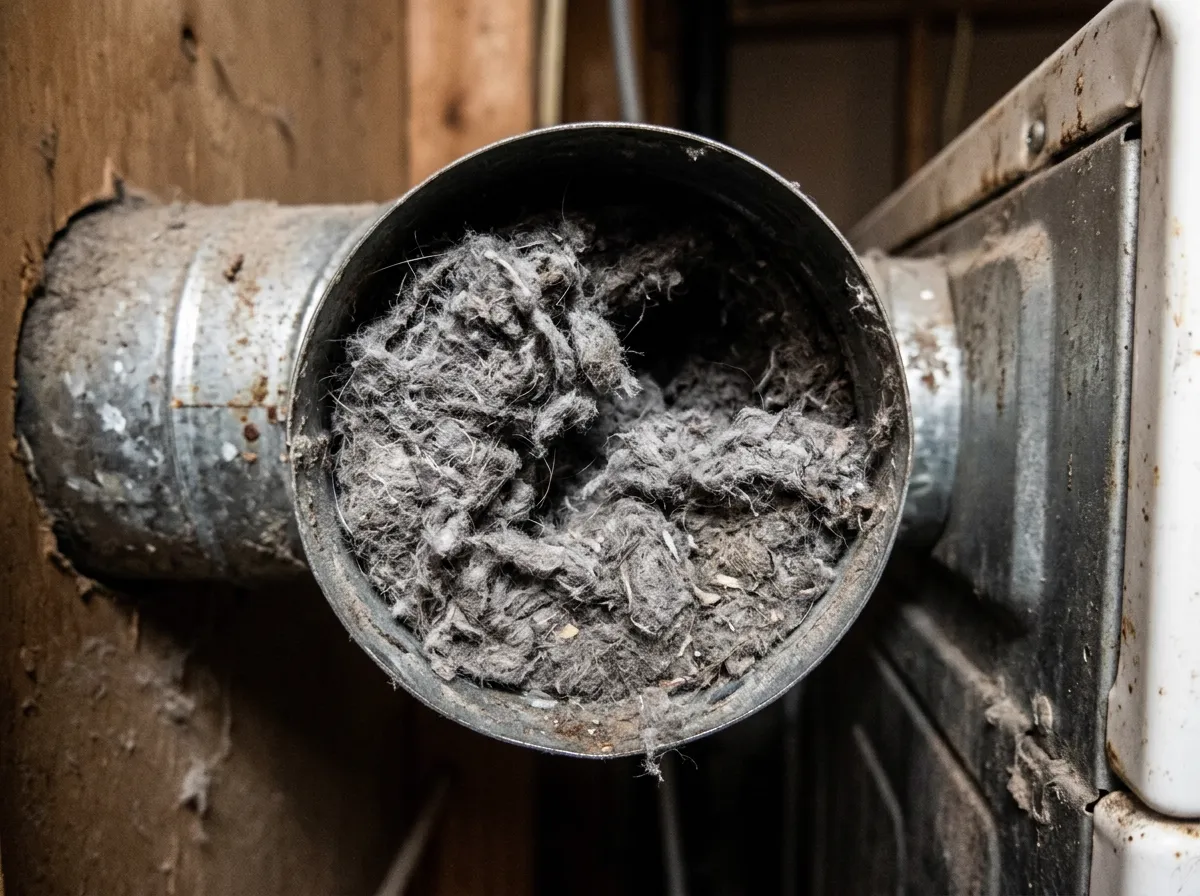
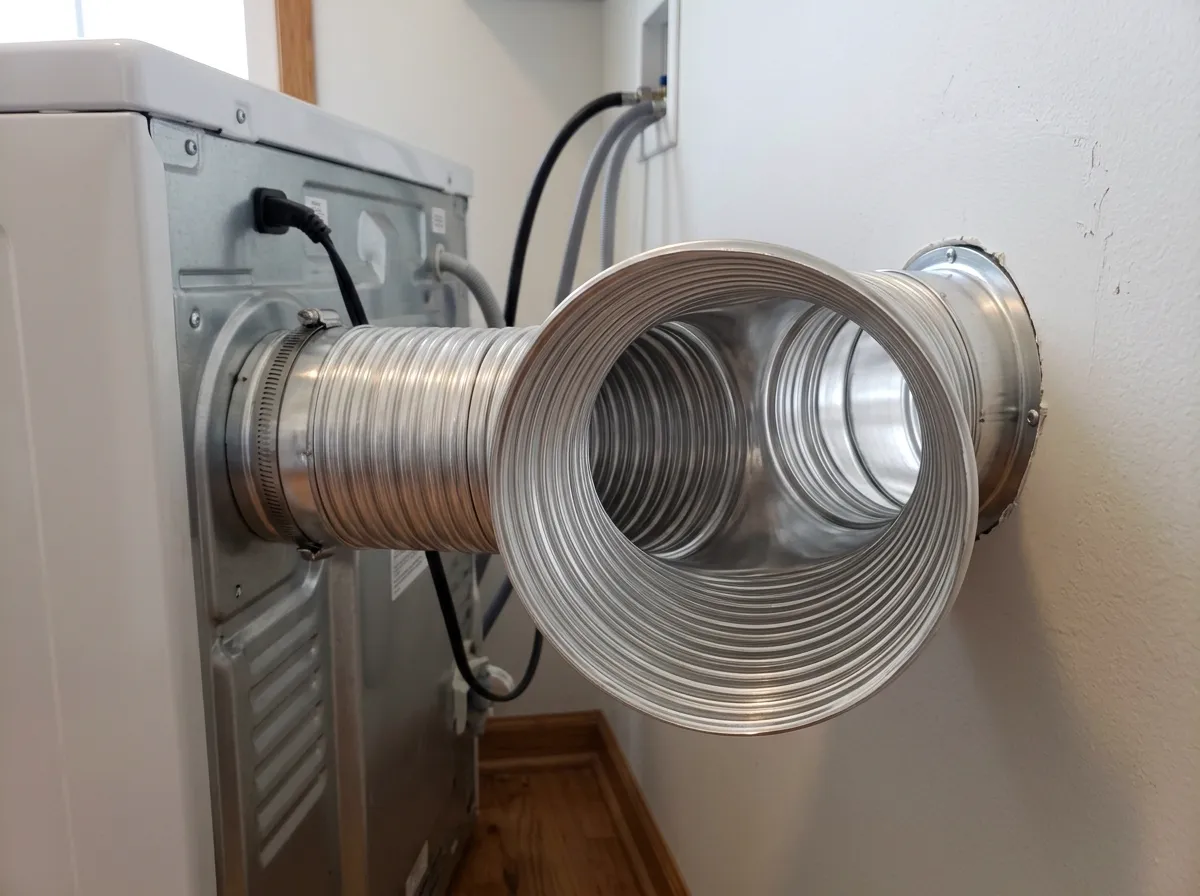
Before
After
Our 4-Step Dryer Vent Cleaning Process
Full Vent Inspection
10 minWe inspect the entire vent line from the dryer connection to the exterior exhaust cap, checking for disconnections, damage, kinks, and code violations.
Disconnect & Access
5 minWe carefully disconnect the dryer and access the vent pipe from both the interior and exterior openings for complete cleaning coverage.
Rotary Brush Deep Clean
20-40 minIndustrial rotary brush system combined with high-powered vacuum extracts all lint, debris, and blockages through the entire vent run. Every inch is cleaned.
Airflow Test & Safety Report
10 minWe measure exhaust airflow velocity with a professional anemometer, reconnect the dryer, verify safe operation, and provide a written safety report.
How Often Should You Clean Your Dryer Vent?
Cleaning frequency depends on your household size, dryer usage, and specific risk factors.
Small Household
1-2 people, 2-3 loads/week
Every 12 Months
Annual cleaning is sufficient for small households with moderate dryer use and no pets.
Average Family
3-4 people, 4-6 loads/week
Every 8-12 Months
Families with regular laundry routines should aim for annual cleaning, leaning toward every 8 months with pets.
Large Family
5+ people, 7+ loads/week
Every 6 Months
Heavy dryer use generates significantly more lint. Semi-annual cleaning prevents dangerous buildup.
Commercial
Laundromats, hotels, salons
Every 3 Months
High-volume commercial dryers require quarterly cleaning to maintain safety and efficiency.
Additional Risk Factors That Increase Cleaning Frequency:
Dryer Vent Cleaning FAQ
Common questions answered by our dryer vent specialists.
Protect Your Home From a Dryer Fire Today
Every load of laundry adds more lint to your vent. Every day you wait increases the risk. Schedule your free dryer vent inspection now and get peace of mind knowing your family is safe.