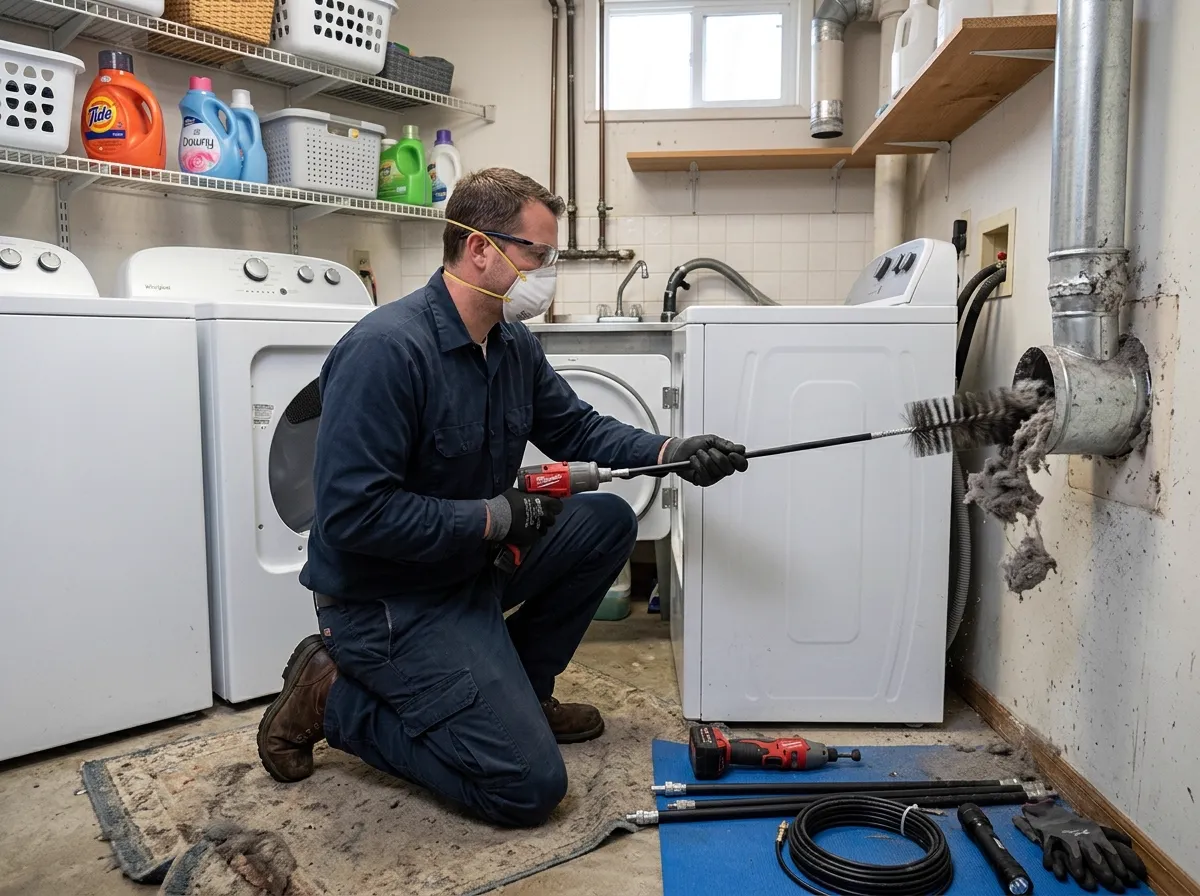
Dryer Vent Cleaning in Washington, DC
Washington DC's 700,000 residents rely on dryers in homes ranging from Georgetown mansions to Capitol Hill rowhouses to Columbia Heights condos. Professional vent cleaning prevents the leading cause of residential dryer fires.
Homes Serviced
Satisfaction Rate
Years Experience
Professional Dryer Vent Cleaning in Washington, DC
Washington DC presents a uniquely challenging environment for dryer vent safety. The District's 700,000 residents occupy housing stock that spans over two centuries, from the federal-era rowhouses of Georgetown and Capitol Hill to the mid-century apartment buildings of Southwest and the gleaming new condominiums rising in Navy Yard and NoMa. Each generation of DC construction brings its own dryer vent complexities, and the city's dense urban fabric means that vent fires can threaten not just individual homes but entire rows of connected structures.
DC's iconic rowhouse neighborhoods form the heart of the city's residential landscape. In Georgetown, Capitol Hill, Dupont Circle, Logan Circle, and Shaw, attached brick rowhouses share party walls that can transmit heat and fire from one home to the next. Dryer vents in these homes are often routed through basement ceiling joists, up through interior wall cavities, and out through the rear or side walls. The tight construction tolerances and shared walls of these historic homes make proper vent routing and maintenance critical for the safety of the entire block.
The city's extensive stock of mid-rise and garden-style apartment buildings, concentrated in neighborhoods like Columbia Heights, Petworth, Adams Morgan, and Cleveland Park, present another category of challenge. Individual unit dryer vents in these buildings may share chase walls, run through common areas, and terminate at locations that are difficult for individual tenants to monitor. Building-wide lint accumulation in shared vent chases is a significant fire safety concern that requires professional attention.
Northwest DC's larger single-family homes in neighborhoods like Tenleytown, Cleveland Park, and Spring Valley feature generous floor plans where the laundry room may be far from any exterior wall. Vent runs of twenty-five feet or more are common in these stately homes, creating extensive lint accumulation zones that only professional rotary equipment can effectively clean.
DC's Rowhouse Construction Amplifies Dryer Vent Risk
The fundamental danger of dryer vent fires is magnified in Washington DC by the city's predominant housing type: the attached rowhouse. When a dryer vent fire occurs in a detached suburban home, the fire can typically be contained within the structure. In DC's connected rowhouses, fire can spread through shared party walls, through the continuous roof structure, and along the common basement walls that link an entire block of homes.
DC Fire and Emergency Medical Services responds to dryer-related fires throughout the year, with incidents concentrated during the cooler months when dryer use peaks and condensation in vent systems is highest. The department has identified clogged dryer vents as a persistent residential fire hazard and actively encourages DC residents to schedule regular professional cleaning.
The age and construction of DC's rowhouses create vent configurations that are particularly prone to lint accumulation. Many of these homes have had their laundry facilities moved or added over the decades, with dryer vents routed through whatever path was most convenient at the time of installation rather than the most direct or safest route. Multiple renovation cycles mean that some DC rowhouses have vent paths that include unnecessary turns, excessive length, and transitions through materials of varying quality.
Basement laundry installations, common throughout DC's rowhouse neighborhoods, present specific risks. Basement-level vents often exit at or below grade, where they can be blocked by landscaping, snow accumulation, or debris. When a dryer operates against a fully blocked exterior vent, the exhaust heat has nowhere to go. The dryer interior temperature rises dramatically, and any accumulated lint in the system becomes a fuel source for ignition.
Georgetown's historic homes, some dating to the 18th century, pose perhaps the most extreme vent routing challenges in the entire city. Thick stone and brick walls, irregular floor levels, and preservation restrictions on exterior modifications all constrain where and how dryer vents can be routed. The resulting installations can be remarkably convoluted, with vent paths that would be considered unacceptable in new construction but exist as the only viable option in these irreplaceable historic structures.
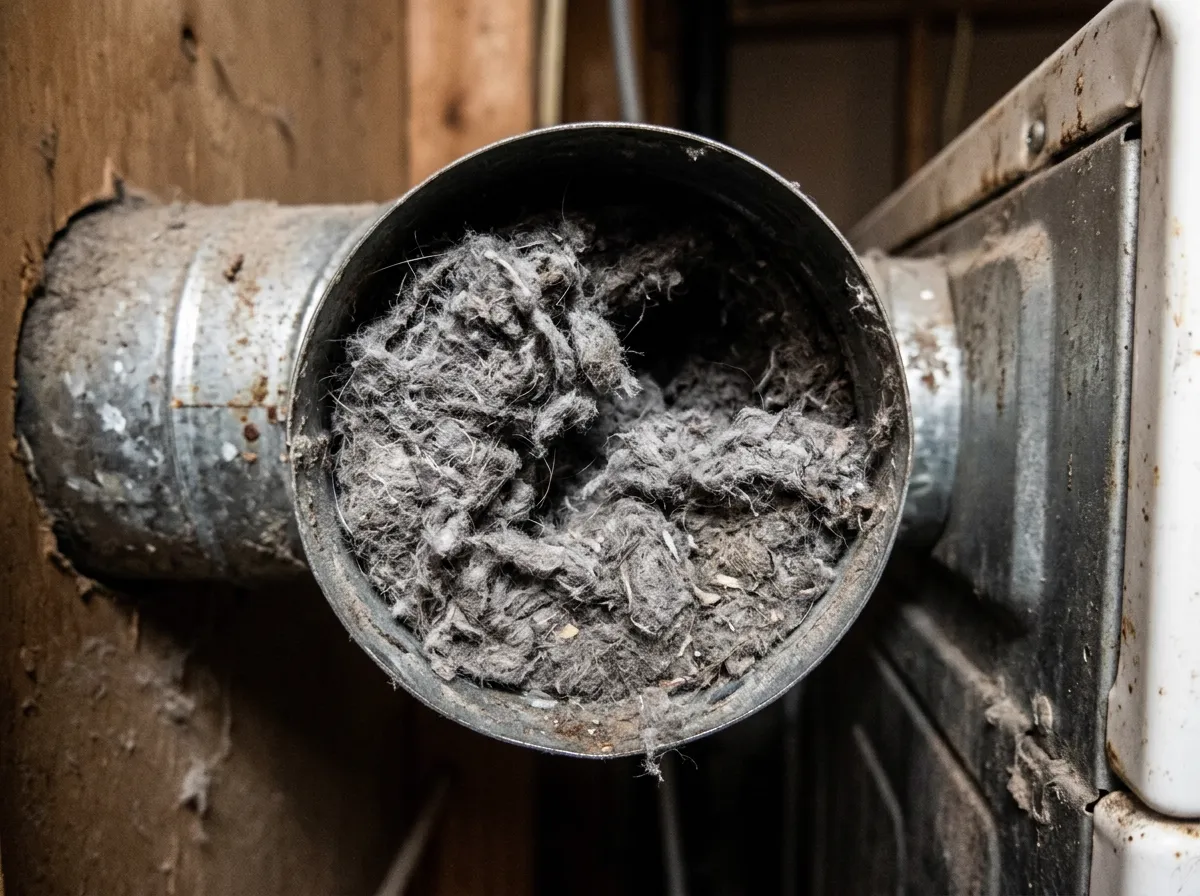
What's Lurking in Your Dryer Vent?
Lint buildup in dryer vents is the #1 cause of home dryer fires. In Washington, older homes with longer vent runs are especially at risk. See what our technicians find during a typical cleaning.
- Lint accumulates at every bend and joint
- 15,500+ dryer fires per year in the US
- Restricted airflow doubles drying time
- Overheated dryers can ignite trapped lint
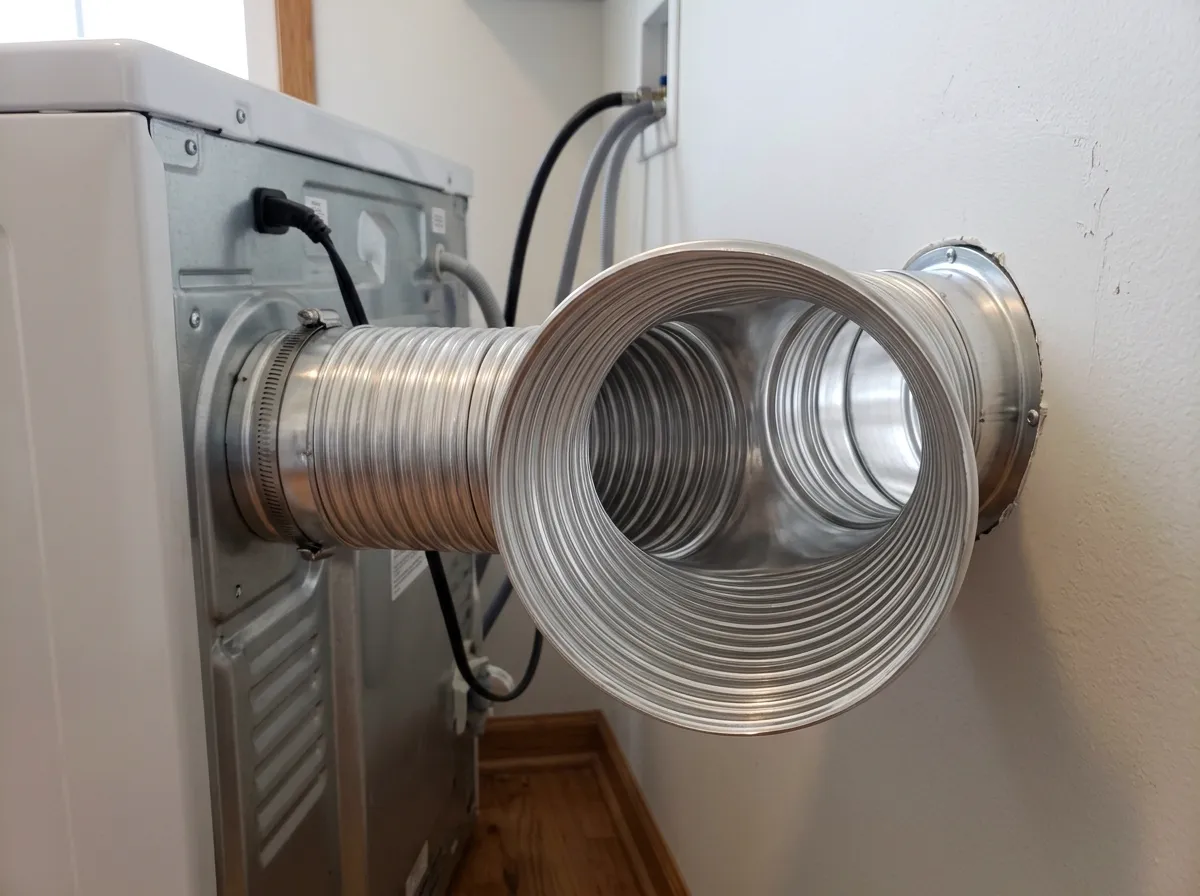
See the Difference
Real results from Washington homes. Every job documented with high-resolution before and after photos.
Expert Dryer Vent Cleaning for DC's Diverse Housing
Our Washington DC dryer vent cleaning service is built around the specific challenges of the District's housing stock. We maintain a full inventory of specialized equipment including low-profile rotary brushes for tight rowhouse installations, extended-reach systems for long condo vent runs, and high-powered air flush equipment for clearing compacted lint from aging vent systems.
For DC rowhouses in Capitol Hill, Georgetown, Dupont Circle, and Logan Circle, our technicians understand the construction methods used in these historic homes and can navigate their complex vent routes without damaging the surrounding structure. We trace each vent path before beginning work to ensure complete cleaning of every section, including the hidden runs through wall cavities and floor joist spaces that contain the heaviest lint accumulation.
In DC's apartment and condo buildings, we coordinate with building management to access shared vent chases and ensure that our cleaning addresses the full system rather than just the portion within an individual unit. This comprehensive approach is essential for buildings where shared vent infrastructure creates fire safety concerns that affect all residents.
Our Step-by-Step Process
Vent Route Mapping
We identify and document the complete vent path in your DC home, from dryer to exterior. In rowhouses, this often reveals hidden runs through wall cavities and between floor levels.
Protected Dryer Access
The dryer is carefully moved with protection for surrounding flooring. The transition duct and lint-heavy area behind the dryer are cleaned. The connection point is inspected for damage.
Rotary Brush Cleaning
Powered rotary brushes navigate the full vent length, scrubbing accumulated lint from walls, joints, and elbows. Specialized tooling for the tight turns typical of DC rowhouse installations.
High-Pressure Air Purge
Compressed air flushes all dislodged lint completely from the system. In long vent runs common in DC homes, this step ensures complete debris removal from the entire path.
Exterior Termination Service
The outside vent cap is cleaned and inspected. In DC where exterior access can be restricted by alley conditions or building configuration, we ensure the cap operates freely.
Flow Verification
The dryer is reconnected and we test exhaust flow at the exterior termination, measuring airflow velocity to confirm complete cleaning and proper system operation.
What Makes DC Different for Dryer Vent Service
Washington DC's housing stock creates dryer vent challenges found nowhere else in the region. The city's strict historic preservation requirements in Georgetown, Capitol Hill, and other designated historic districts limit modifications to building exteriors, constraining where dryer vent terminations can be located. This sometimes results in unconventional vent routing that increases the difficulty of both installation and maintenance.
Capitol Hill, the largest collection of residential rowhouses in the United States, contains thousands of homes where dryer vents share party walls with neighboring structures. In these connected homes, proper vent routing and maintenance is not just an individual concern but a collective safety imperative. A clogged vent in one home can create a fire that damages multiple adjacent properties.
The gentrification and renovation wave that has transformed neighborhoods like Shaw, Logan Circle, Petworth, and Brookland has brought modern laundry facilities into homes that were not designed for them. Dryer vents installed during these renovations vary widely in quality, and we frequently find installations that exceed recommended length limits or use materials that do not meet current code requirements.
DC's numerous condominium conversions present another unique challenge. Many of the city's mid-rise apartment buildings have been converted to condominiums, and individual unit owners are now responsible for maintaining dryer vents that were originally part of a building-wide system. When individual owners neglect their vent maintenance, it can create fire safety risks that affect the entire building.
The Navy Yard, NoMa, and Wharf neighborhoods represent DC's newest residential construction, with large-scale buildings that feature individual dryer hookups with vents routed through common building infrastructure. These modern systems are designed to code but still require regular professional cleaning, particularly as buildings age and lint accumulation begins to affect the newer installations.
Benefits of Dryer Vent Cleaning in Washington
Why thousands of Washington, DC homeowners trust DMV Air Pure for their dryer vent cleaning needs.
Rowhouse Fire Safety
In DC's connected rowhouses, a dryer fire threatens your home and your neighbors. Clean vents protect the entire block.
Faster Drying Cycles
Eliminate the multi-cycle drying caused by lint-restricted vents. Clean vents restore your dryer to single-cycle performance.
Lower Pepco Bills
When your dryer runs shorter cycles, the savings on your electricity bill compound month after month throughout the year.
Historic Home Protection
Georgetown and Capitol Hill homes are irreplaceable. Professional vent cleaning prevents fires that would devastate historic fabric.
Humidity & Mold Control
DC's Potomac River humidity promotes moisture buildup in restricted vents, leading to mold growth. Clean vents allow proper moisture exhaust.
Condo Building Safety
Professional cleaning for DC condos and apartments ensures your vent does not create fire risk for you or your building neighbors.
Washington DC's fire department is among the busiest in the nation, and preventable dryer fires represent an avoidable burden on these critical emergency resources. By maintaining clean dryer vents, DC residents contribute to community safety while protecting their own homes and families. It is one of the simplest and most impactful fire prevention measures available to homeowners and renters alike.
The financial case for dryer vent cleaning in DC is compelling. In a city where median home values exceed $650,000 and many properties are worth well over a million dollars, the cost of annual vent cleaning is trivial compared to the value at risk. Factor in the energy savings from more efficient dryer operation and the extended appliance lifespan that clean vents provide, and the service effectively pays for itself.
For DC tenants in apartments and condominiums, dryer vent cleaning is often overlooked because it falls in the gray area between tenant and landlord responsibility. We encourage all DC renters to discuss dryer vent maintenance with their property management company. If the building does not provide this service, we offer individual unit cleaning that can be scheduled at your convenience.
DC's seasonal patterns affect dryer vent performance significantly. The humid summers promote lint adhesion and moisture accumulation in vent systems, while the heavy dryer use during cold winters creates the conditions for rapid lint buildup. Scheduling cleaning in early fall provides the best timing: it clears the moisture-related accumulation from summer and prepares the vent for the heavy-use winter months ahead.
What Washington Homeowners Say
Real feedback from your neighbors.
"Our Capitol Hill rowhouse had a dryer vent that ran through the basement ceiling and out the back wall. It had not been cleaned in at least eight years. The technician extracted a staggering amount of compacted lint and told us honestly that it was a significant fire risk. Now we schedule annually. With attached neighbors, we feel responsible for more than just our own home."
Rebecca L.
Capitol Hill, DC
"Living in Georgetown, everything about home maintenance is more complicated, and dryer vents are no exception. Our vent takes a winding path through a 200-year-old brick wall. The team had the right equipment and the patience to navigate this unusual routing. They extracted lint that must have been accumulating for over a decade. Remarkable service."
Jonathan H.
Georgetown, DC
"In our Columbia Heights condo, the dryer vent runs horizontally through the building for about twenty feet. Clothes were taking two full cycles to dry and the dryer was getting dangerously hot. The cleaning restored everything to normal and the building manager has now recommended the service to all residents."
Adriana M.
Columbia Heights, DC
Why Washington Homeowners Choose DMV Air Pure
See how we compare to typical dryer vent cleaning companies in the Washington area.
- ✕Bait-and-switch pricing tactics
- ✕Untrained day laborers
- ✕No before/after documentation
- ✕Hidden fees and upsells
- ✕No follow-up or guarantee
- ✕Use basic shop vacuums
- Transparent flat-rate quotes — no surprises
- Background-checked, trained technicians
- HD photos of every job documented
- All-inclusive pricing, zero hidden fees
- 100% satisfaction guarantee
- HEPA-filtered negative air machines
Frequently Asked Questions
Common questions about dryer vent cleaning in Washington, DC.
Protect Your DC Home — Schedule Dryer Vent Cleaning
Join thousands of Washington homeowners who trust DMV Air Pure for professional dryer vent cleaning. Free estimates, no obligation, and service you can count on.
Also Serving Nearby Areas
Washington Neighborhoods We Serve
Georgetown · Capitol Hill · Dupont Circle · Adams Morgan · Columbia Heights · Petworth · Tenleytown · Cleveland Park · Brookland · Takoma · Glover Park · Woodley Park · Shaw · Logan Circle · Navy Yard · NoMa